You may know Todd Lyon as “Fashionista,” after the New Haven vintage store she has co-run for over two decades. But you may also know her as Mimi Coucher, the moniker she went by as a cartoonist. Or maybe she’s Dottie Nylon to you, her punk rock girl gang nickname. To a chosen few who know her legal name, she’s Mary Todd Lyon.
No matter what name she goes by, to all of us, she is a CT icon. Through music, art, or fashion, she has shaped the avant-garde scene of New Haven. And no matter how many Todds you know, she has undoubtedly zested some part of your life, too.
Mary Todd
Todd was originally going to be her legal name, after her father’s mother, who went by the nickname Toddler, shortened to Todd. But an hour after Todd was born, her mother’s mother took a look at her and said, “dimple in chin, devil within.” Her grandma insisted that Todd have a Christian name so she’d “go to Heaven.” So, Mary Todd Lyon was born, but to everyone else for the rest of time, she'd be Todd Lyon.
She was born in Orange, Connecticut, and immediately kicked and screamed to get out of town. In the 1960s, Orange became a “white flight” area for former New Haven residents, but also a place of refuge from “urban renewal.” From 1957 to 1969, Mayor Richard C. Lee tore down row houses in a “blitz of demolition” to make New Haven the nation's first “slumless city.” But in that process, many New Haveners had to relocate to nearby cities and suburbs, like Orange.
Todd became privy to the world outside of the suburb after her two older sisters went to Woodstock. “It was like they changed species when they came back.” They left as “co-eds,” preppy and collegiate in their family station wagon, but afterward, they were dropped off, wagon-less, by a walrus-moustached hippie in a peace-painted Volkswagen. What they lacked in bras, they made up for with hippie beads galore. The sisters then began the spree of “hand-corrupting” Todd into the rebel she is today.
Dottie Nylon
Todd walked right off the graduation stage into her sister’s band, Eight to the Bar, as a singer. Todd began performing in the 1970s tristate bar scene as a 17-year-old in the 18-drinking-age Wild West. “The amount of people having sex in the parking lot, the bar fights… It was so unregulated. It was completely unchained madness. And, of course, it was the best thing ever.”
But after gigging for three years, she felt ready to return to school and pursue her love of painting. She applied to Parsons for fine art, but knew her rather eccentric resume and patchwork of college credits gained over summers and odd semesters would put her at a disadvantage. She knew she had to make a statement with her entry piece.
She made four large paintings, each collaged over with magician’s flash paper that would snap into a flame once touched. During her interview, she brought the admissions committee into the women’s bathroom, positioned each canvas over each sink, and, with a lit cigarette (this was the late 70s, after all), hit the flash paper on the canvases to reveal the painting underneath. She was admitted.
However, the school didn’t encourage the artistic world that raised her and wanted to continue flourishing in. She found the school more focused on conforming students into corporate-friendly designs with less room for creativity. She left Parsons, wanting to explore more abstract forms of art. She enrolled at the University of Hartford art school, which helped her advance to junior year, allowing her to take courses at Trinity College and the Hartford School of Music to supplement her education. But, “I always tell people my real education was at The Mudd Club” in New York.
New Yorker
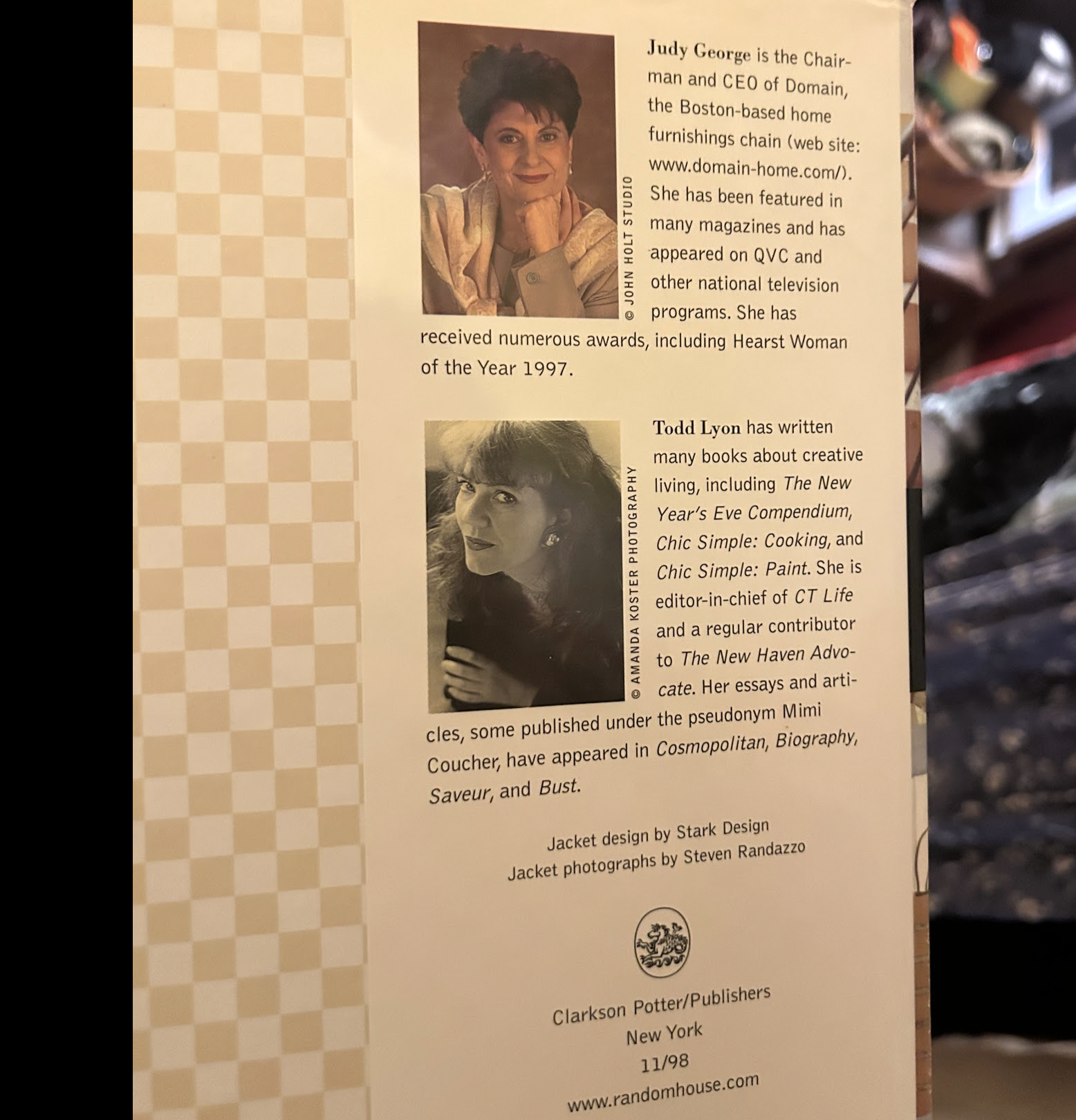
Todd’s author biography on one of her many publications.
Once she finished school in Hartford, she moved back to New York and worked at Performing Arts Services, which managed avant-garde artists such as John Cage and Philip Glass. She stayed in New York for ten years, but kept getting pushed geographically down and down the city as gentrification pushed her into tougher and tougher areas. “I lived in an apartment building with the joke name ‘Little House on the Prairie,’ because in my block, it was the only one on my side of the street that wasn't a heroin shooting gallery.” But she enjoyed the challenges, finding it worth living in a constantly innovating city. “The whole scene was bursting with Keith Haring stuff, I was going to some of the very first hip hop shows ever.” She loved going to basement performances, enjoying drag for the first time, seeing artists of all forms mingling and creating.
Then, the AIDS crisis hit, and the disease took friends all around her. She saw the disease have a significant toll on the arts scene. Many of her best friends, like her roommate, partner, and friend Richard, died of AIDS before they found a cure. She was planning to get out of town for a while to escape the pain when her sister Cynthia called Todd. She said their new vocalist moved on, and asked if Todd would want to join the band again. Todd thought she would move to New Haven for a year and get some peace.
Mimi Coucher
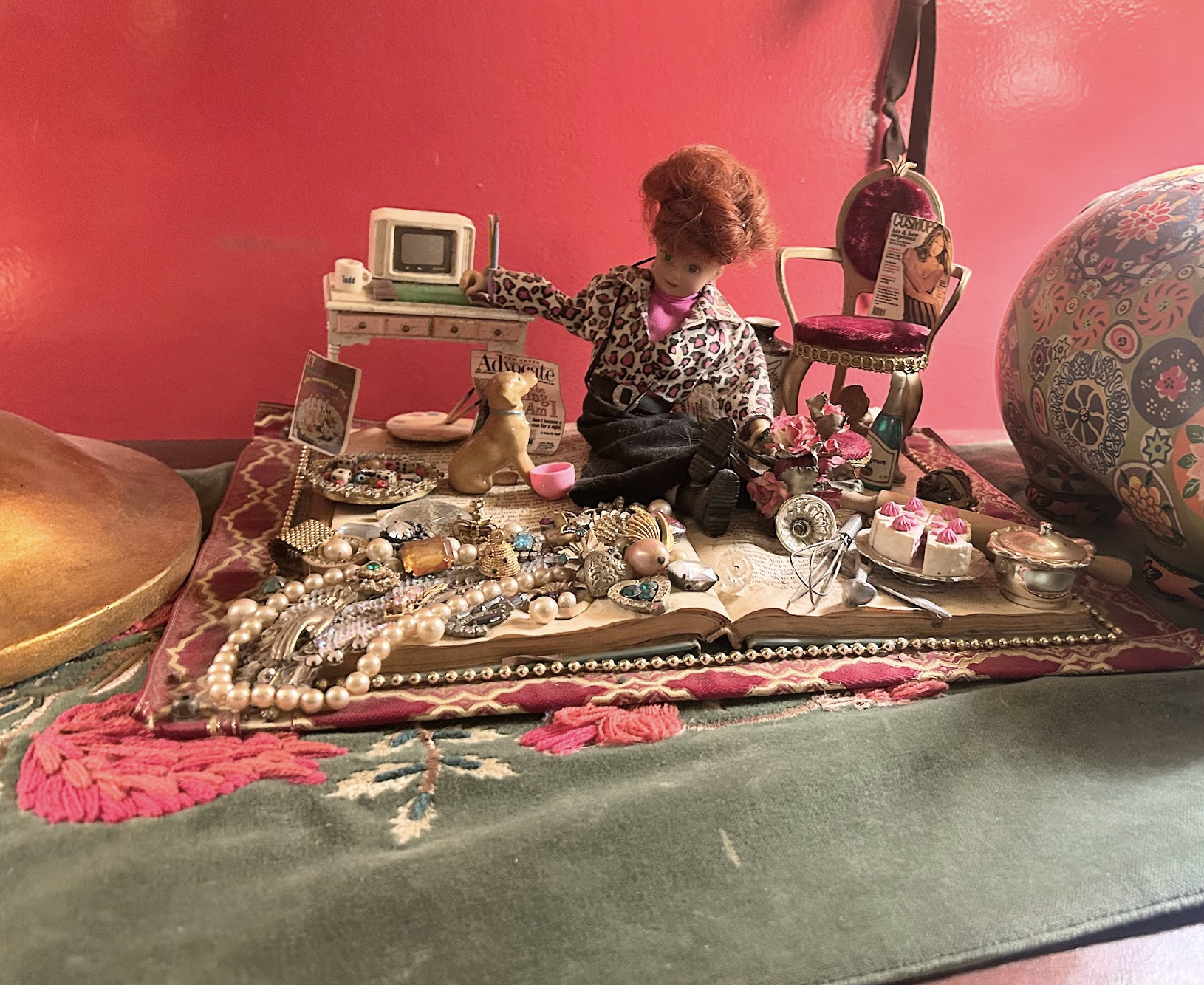
A friend of Todd’s portrait of Todd as a birthday cake topper
Still struggling with the AIDS crisis, Todd was lamenting with one of her friends about the importance of using condoms. But, "of course, men were never going to use condoms of their own. It was up to women to make men use condoms." Her friend, an editor at the Boston Phoenix, asked if Todd would write "A Girl's Guide to Condoms" for the newspaper. She went by Mimi Coucher for the article, and it became a hit. The newspaper asked Todd to write a column about her life, which she balanced during the day while performing at night. But after three years, she lost her voice and stopped performing altogether. "We were gigging five, six nights a week. It was wonderful, but it was not sustainable for me."
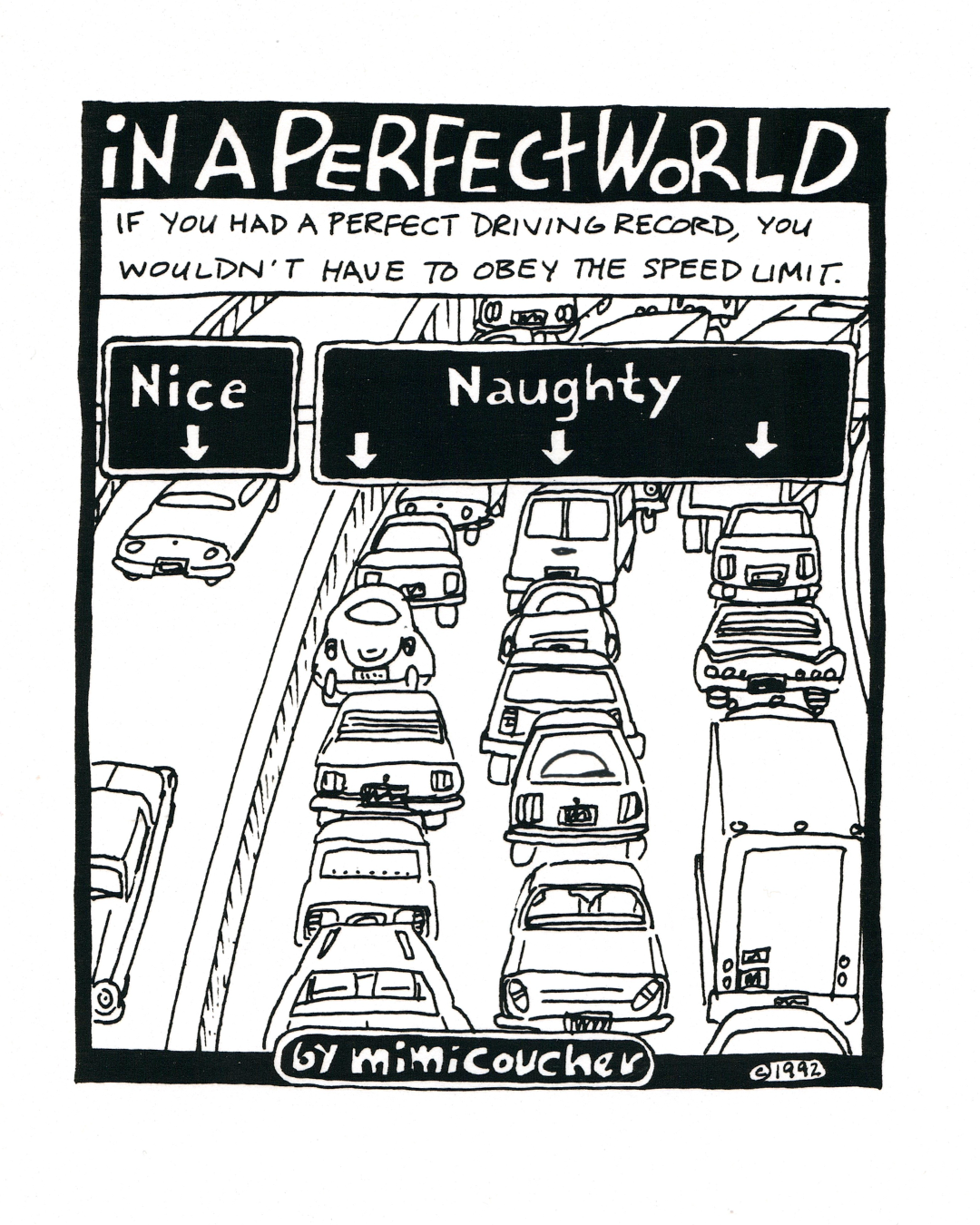
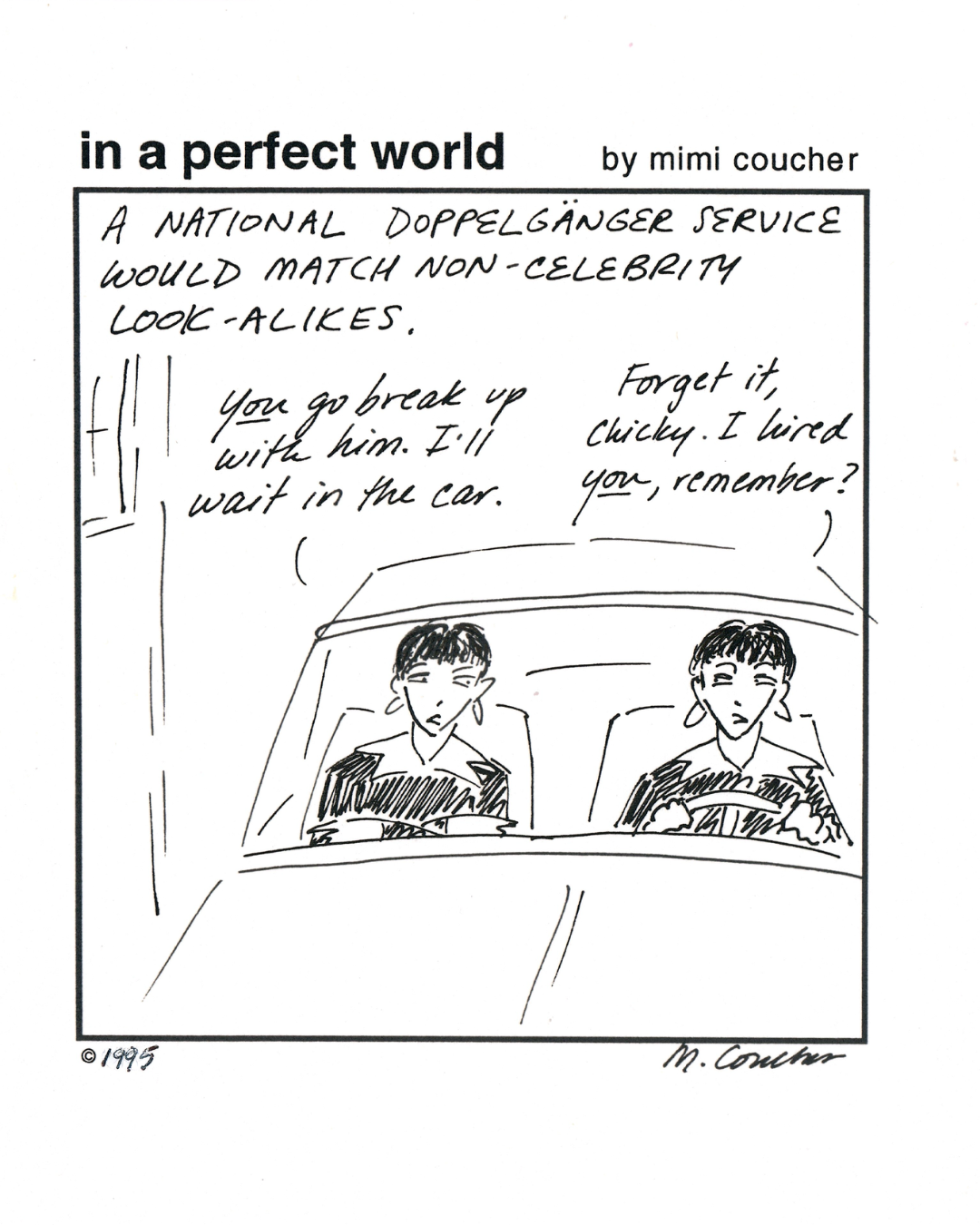
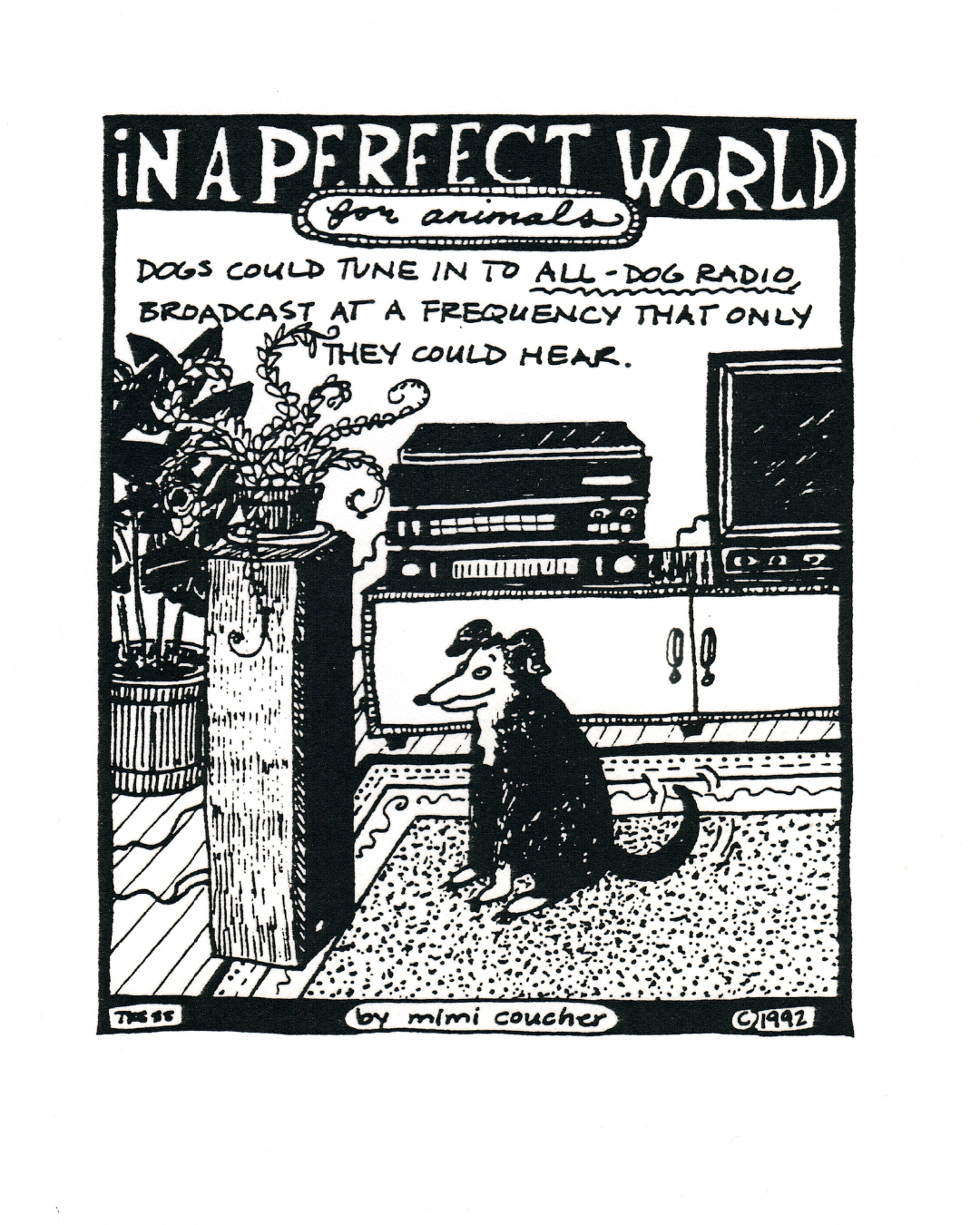
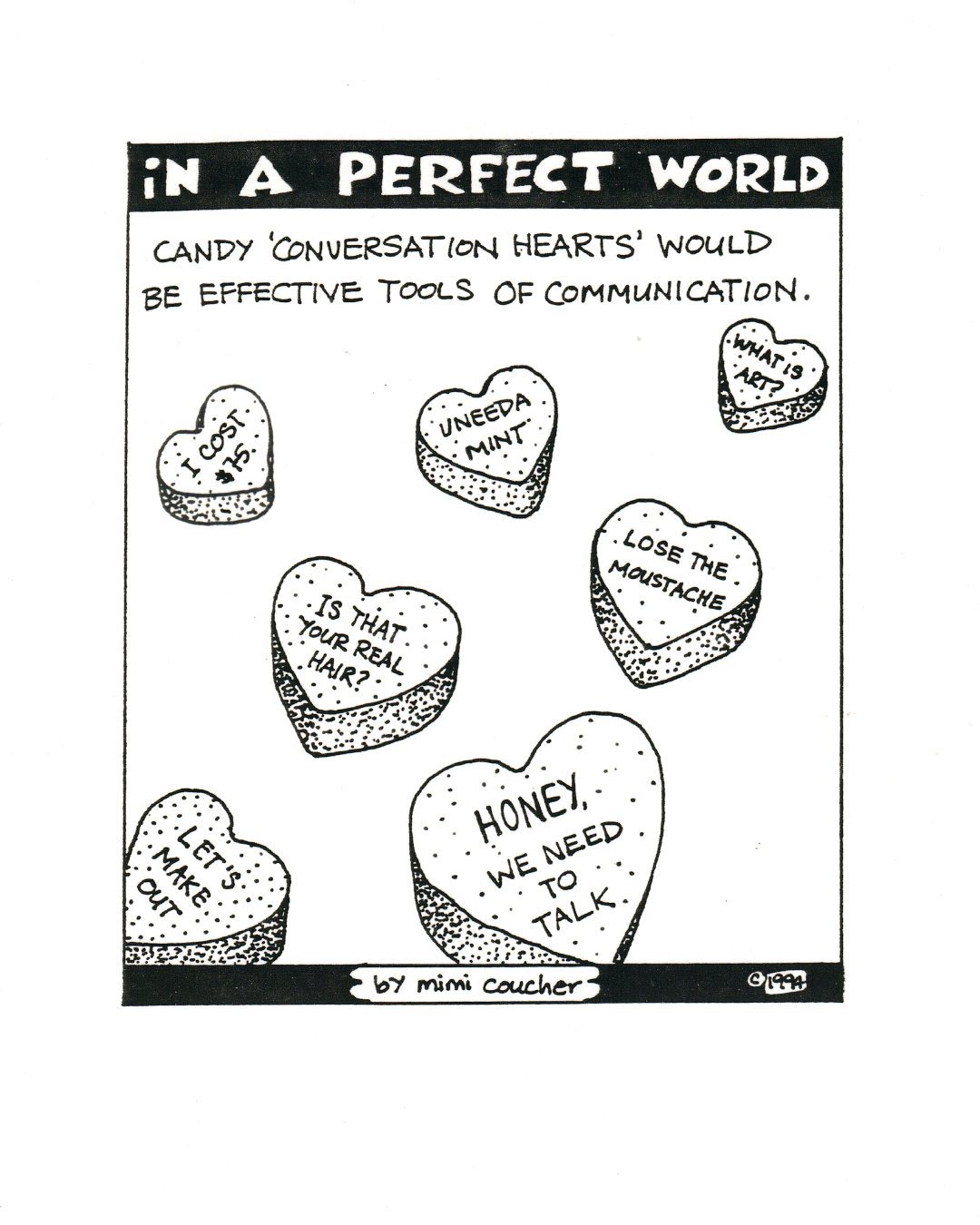
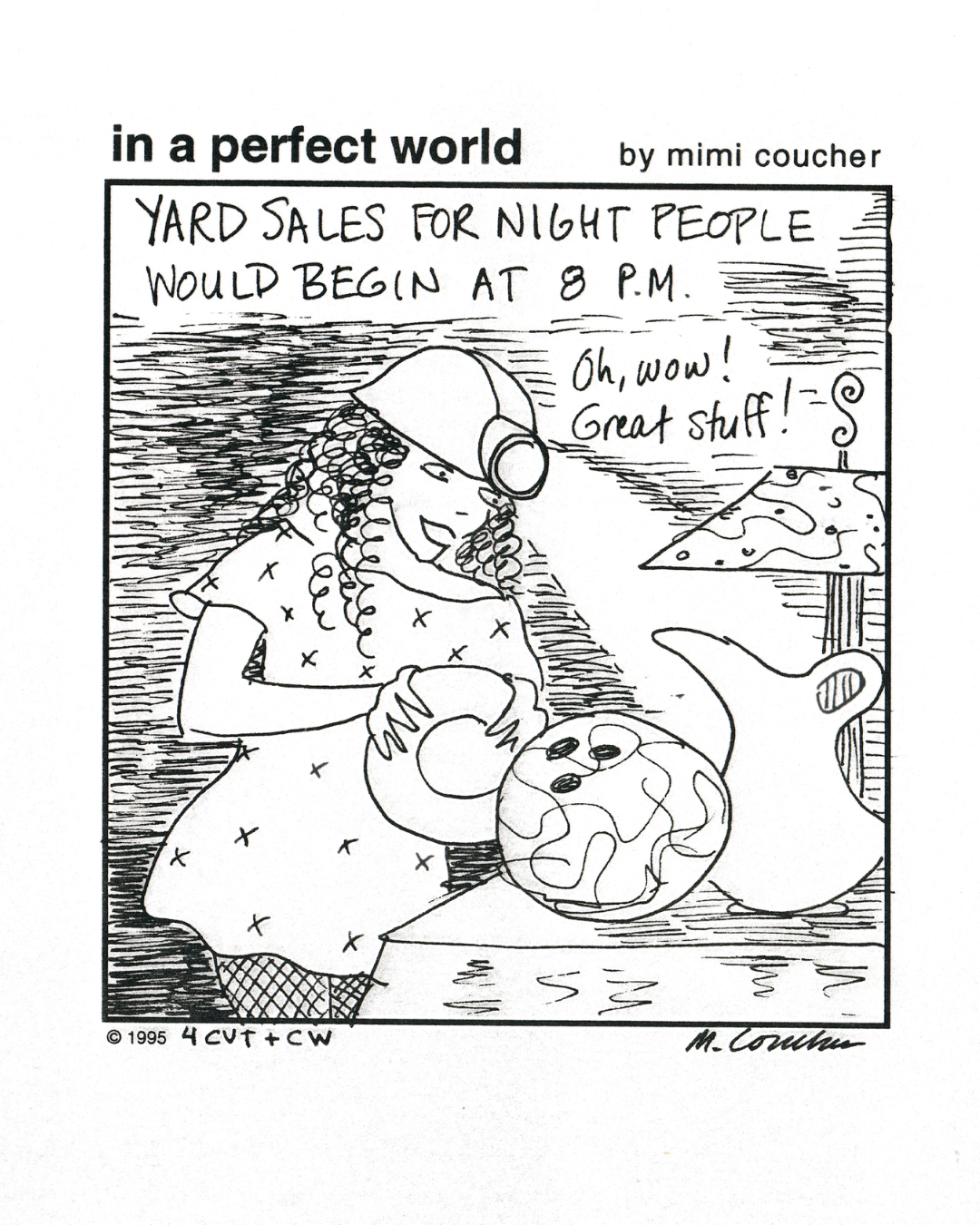
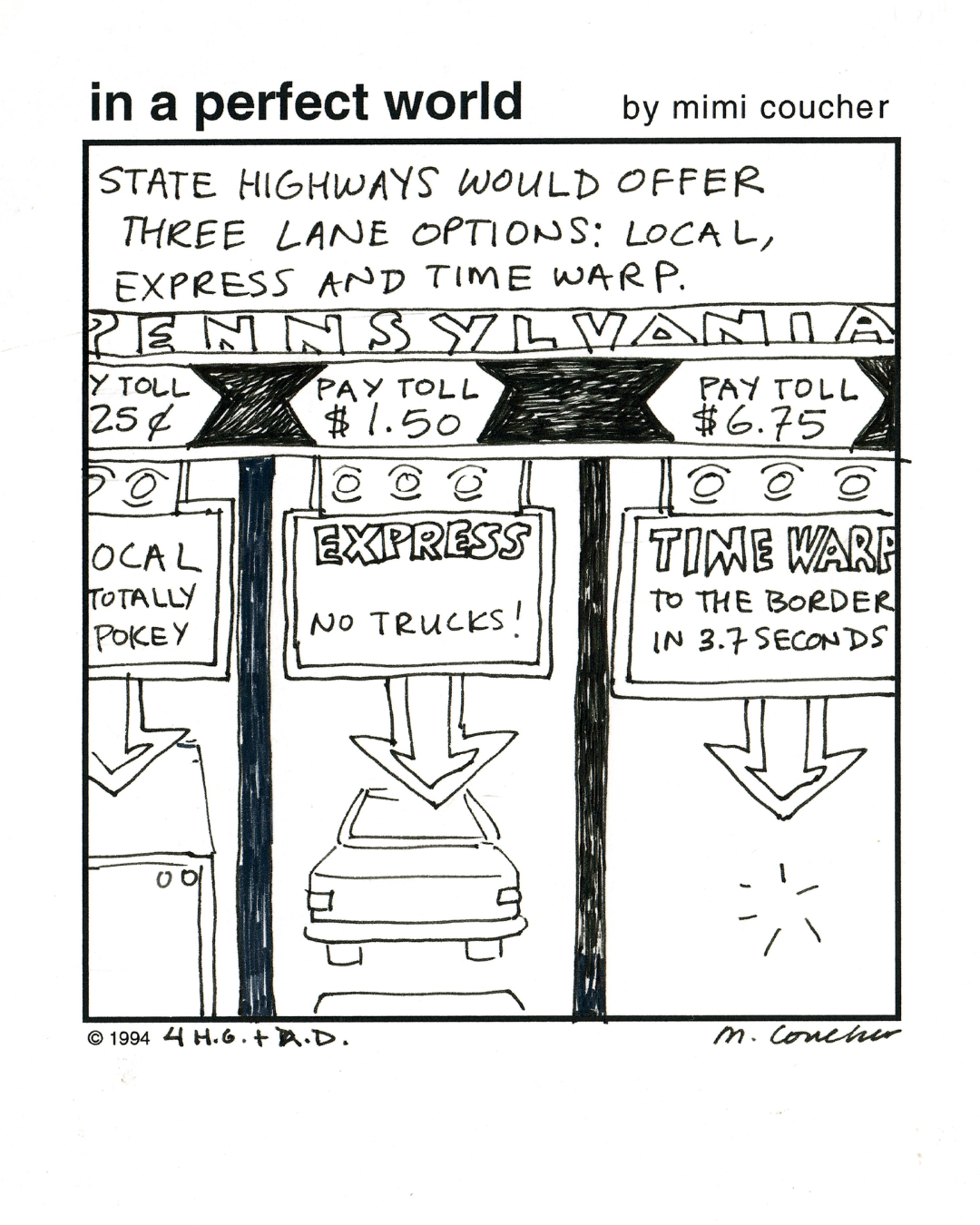
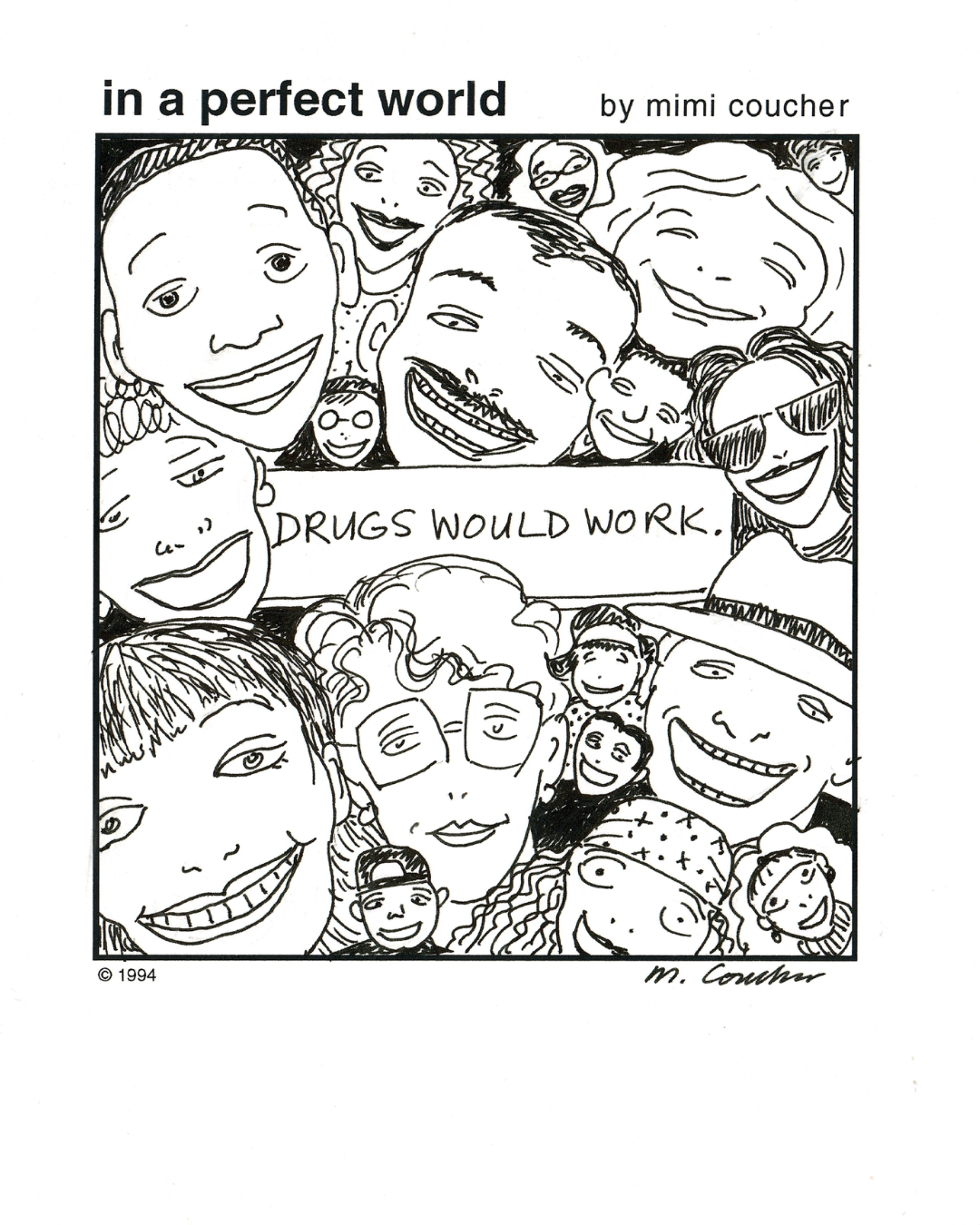
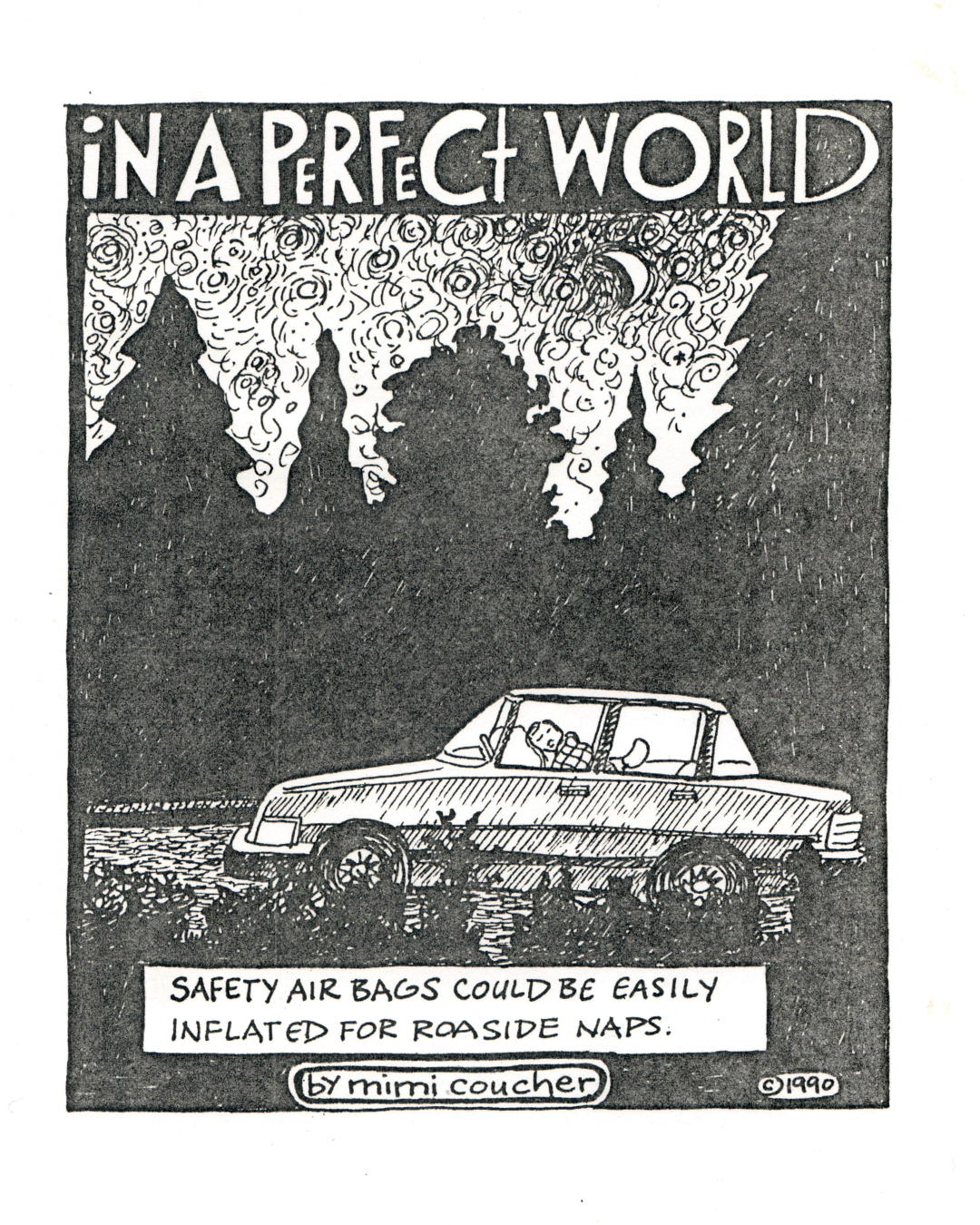
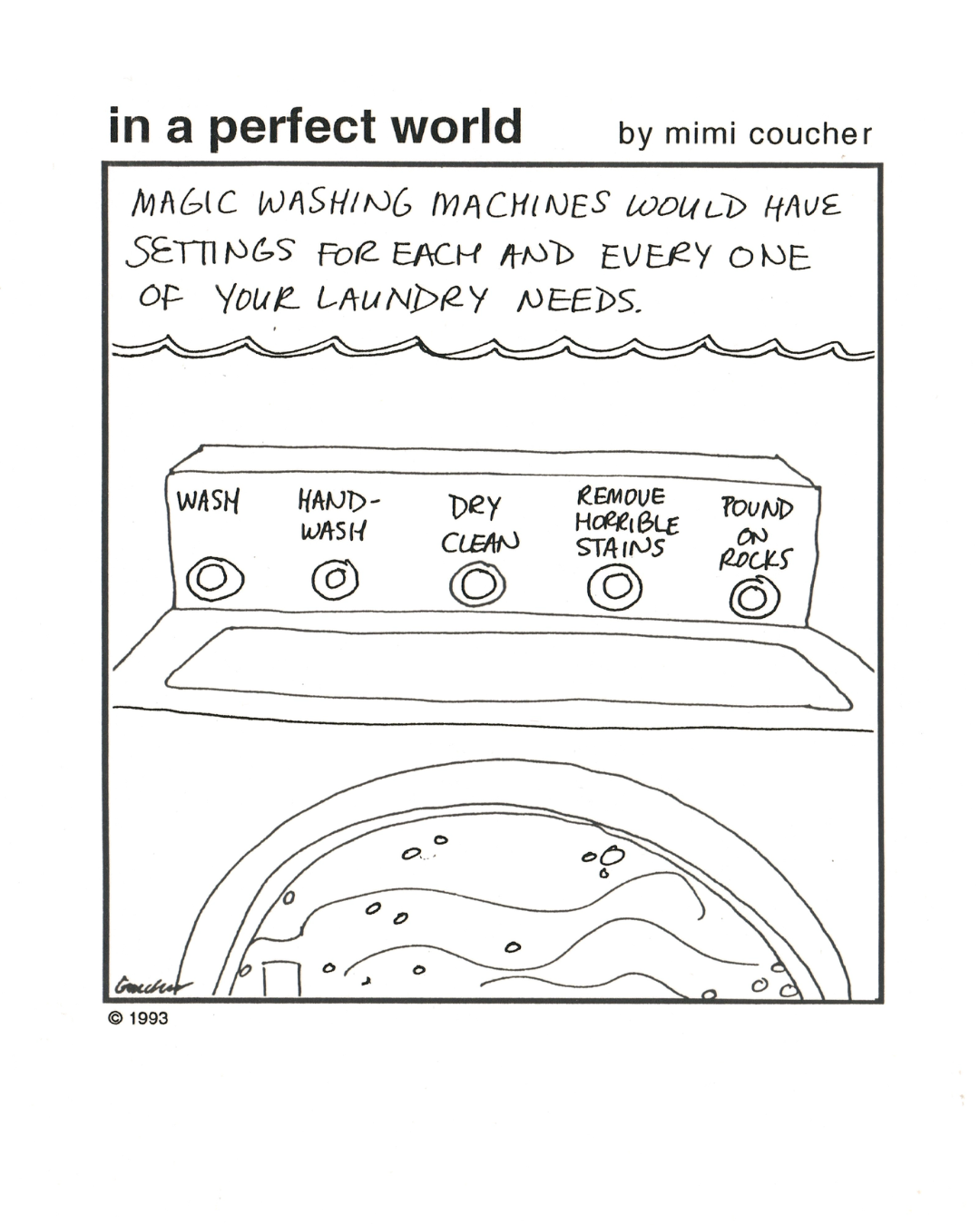
She continued to write for the Boston Phoenix, including a weekly one-panel comic called “In a Perfect World,” about how the world would work. Some of the ideas Todd had came true, like virtual dates and “test-driving” houses for a few nights before buying.
When Todd moved into her East Rock apartment (where she’s lived for over three decades), she got a job as a lifestyles editor at a New Haven weekly paper. Todd ended up picking up gigs on the side, including writing nonfiction books about topics from cooking to painting. She ended up writing 17 books in 11 years, including a ghostwritten book for Joan Rivers.
After producing so much content and dealing with an overly-ambitious agent she was burnt out. She could hardly look at a keyboard to write. She continued writing as a restaurant critic for some time, but hit a wall with her literary creativity.
Fashionista
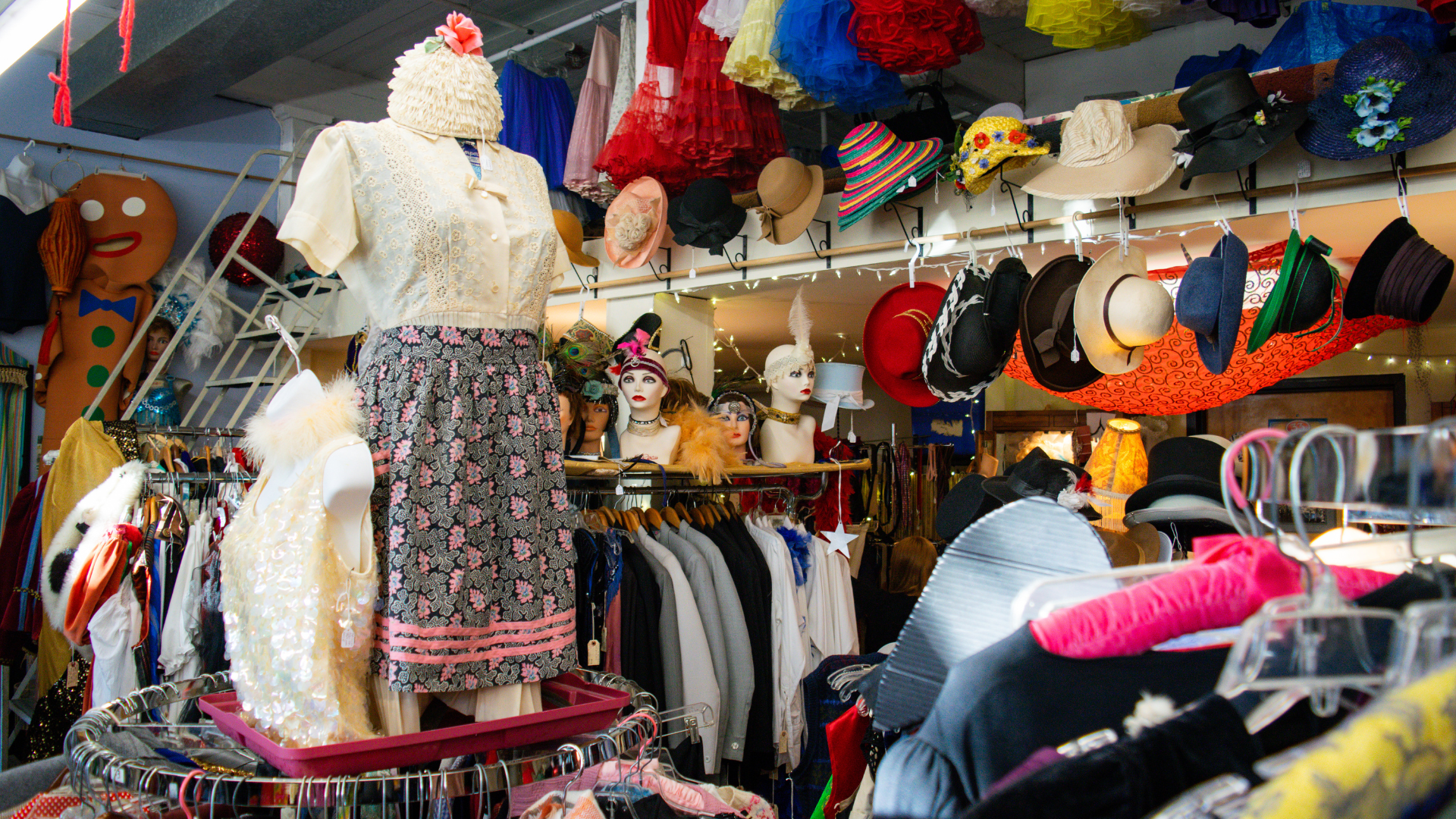
After so much adventure, Todd built up an incredible closet. She had clothes she wore opening for the Dead Kennedys with the band Baby Buddha, writing a book on business casual wear for Land’s End (“the biggest acting job of my life”), and touring with her sisters. While working as a restaurant writer, Todd met Nancy Shea through the New Haven scene, someone who also had a fantastic closet. They wanted to share it with others.
Before there was even a thing called a pop-up, the duo hosted one at Nancy’s State Street apartment. Their boyfriends passed out postcards downtown promoting the event, which was a hit considering there was no vintage store in New Haven at the time. They continued hosting the events once a month, but reached a breaking point when Nancy got buried under an avalanche of fur coats in her apartment. They knew they needed space.
Fashionista Vintage & Variety, the brick-and-mortar, was born on Court Street. Todd was flourishing in her now social career after an isolating writing spree. “Fashionista is like hosting a party. You never know who’s going to show up, but we have the greatest customers.”
The store has landed in different spots: Church Street across from Gateway, the corner of Whitney and Trumbull, and now at MarlinWorks in East Rock. Over its two-decade-long footprint, it shepherded the bubbling vintage scene we know today.
Todd Lyon
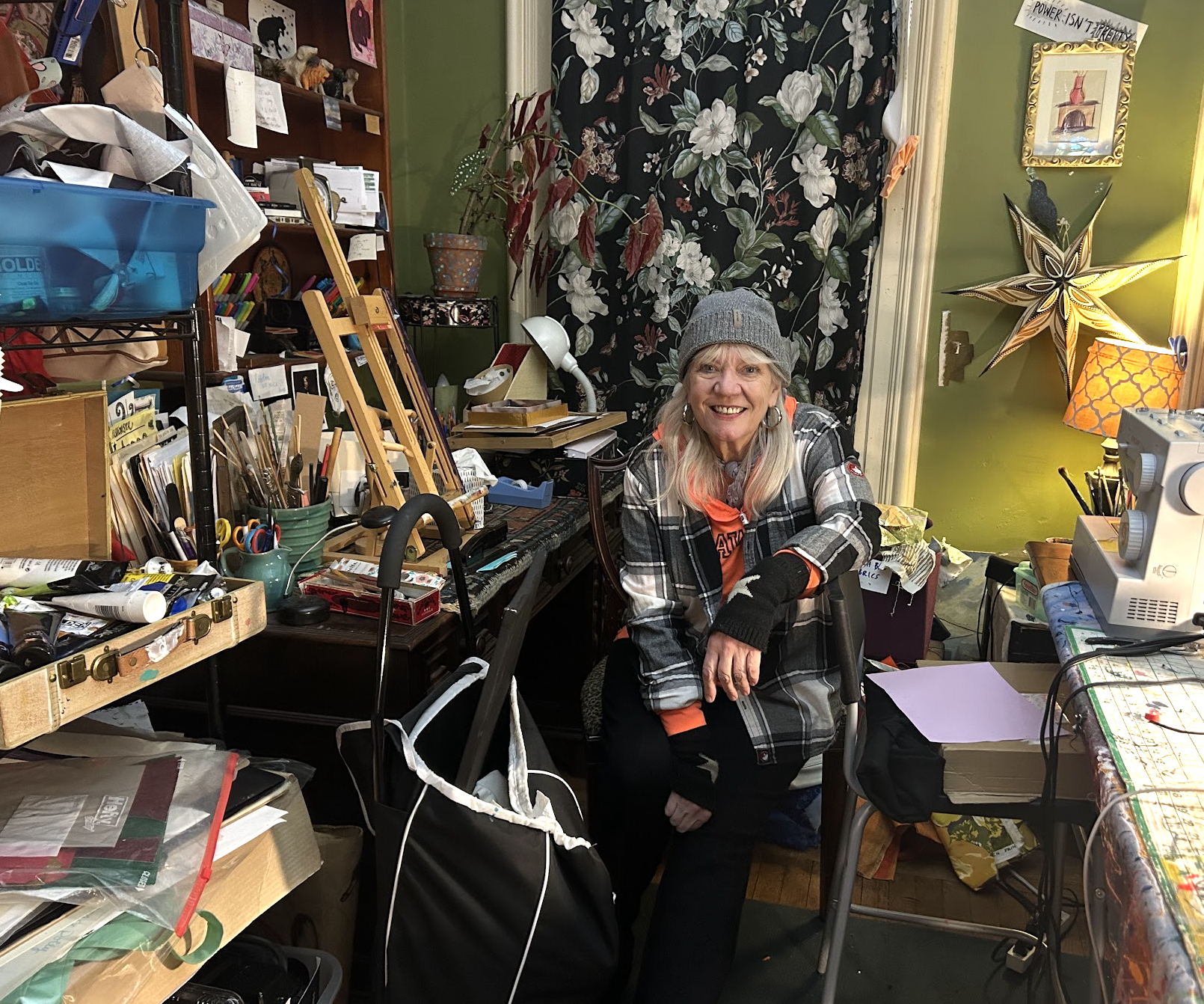
Todd in her at-home art studio space
Todd continues to co-pilot Fashionista, although has been focusing more and more on her painting. She mostly paints still lifes using acrylic and collage. Many of her paintings show reverence for the culture and people who raised her, and have many of the bright colors you can find all over Fashionista.
New Haven is often like a beautiful meadow underneath a pile of concrete. Sometimes, a stunning chicory pops through the cracks, only to be sprayed by YaleRoundup. Sometimes, concrete gets poured on something that's just beginning to bloom, like the Statehouse, destroying anything beautiful that pops up there again. But other times, those little weeds say fuck you to Mandy Management and Pike and Blackstone, and pop their way in a different crack between slabs. Todd has always been that beautiful middle finger to anything trying to stifle culture in the city, and brings all the other beautiful weeds along with her. Whether moving spots, maneuvering the rent jackups, or carving a new path for vintage in New Haven, is there anything more punk than that? The most avant-garde thing one can say is, "Come in, fellow avant-gardeners, the water’s fine."
Through her many names and stamen, there is the same base root, one of deep love, curiosity, sass, comedy, and passion for what makes the city beautiful. She is both the mirror and the muse, Mary Todd now looking at Todd.
Take a look at some of Mimi Coucher’s In a Perfect World one-panel comic series: